From Isolated to Involved: How a Simple App Made My Neighborhood Feel Like Home Again
You know that feeling when you walk past your neighbors and just nod awkwardly? I used to think living in a busy city meant loneliness was inevitable. Then I downloaded a small neighborhood app—not for emergencies, not for sales, but for simple human connection. It started with borrowing sugar, then turned into shared meals, dog-sitting swaps, and real friendships. This isn’t about high-tech innovation; it’s about how one unassuming tool quietly transformed my daily life, my sense of safety, and even my ability to solve problems creatively. At first, I didn’t expect much—just maybe a quick way to find lost pets or post a garage sale. But what I found was something deeper: a quiet return to belonging. And honestly, it changed everything.
The Quiet Loneliness of Modern Urban Life
Let’s be real—most of us didn’t move into our homes expecting to feel alone. We chose our neighborhoods for the schools, the parks, the quiet streets. But over time, something shifted. Mornings became a blur of coffee, emails, and school drop-offs. Evenings vanished into dinner prep, laundry, and the endless scroll through screens that promised connection but often delivered isolation. I’d pass my neighbor in the hallway—smile, say hi—but we never really talked. No time. No reason. No idea where to start. And I know I’m not the only one who’s felt this way.
There’s a kind of loneliness that doesn’t scream—it whispers. It’s not dramatic, but it’s there: in the silence after the kids go to bed, in the empty chair at the dinner table, in the way you realize you haven’t had a real conversation in days. I used to think this was just part of adult life, especially for women juggling work, family, and home. But then I started noticing little things—like how the elderly couple downstairs always waved but never had visitors, or how the new family across the hall looked overwhelmed and unsure. We were all living side by side, but we weren’t living together. The truth is, modern life is designed for efficiency, not connection. And somewhere along the way, we traded community for convenience.
I remember one evening, I was rushing home after a long day, arms full of groceries, one kid on the phone needing help with homework, the other coughing from a cold. I dropped my keys, spilled a bag of apples down the stairs, and just stood there, near tears. No one came to help. Not because people were unkind—but because they didn’t know. We hadn’t built the kind of relationships where asking for help felt natural. That moment stayed with me. It wasn’t just about the apples. It was about realizing I was raising my kids, managing my home, and handling stress—all without a real support system nearby. And I knew I wasn’t alone in that.
Discovering the App: A Nudge Toward Connection
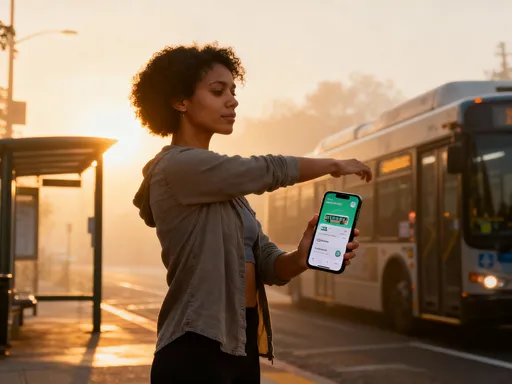
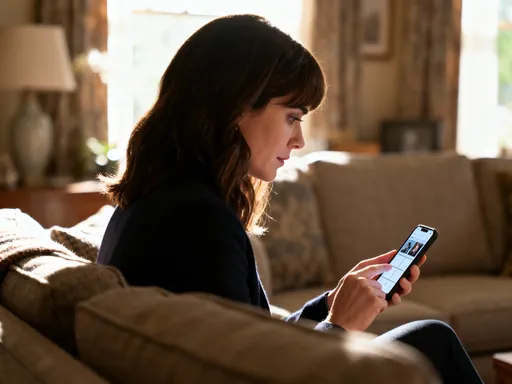
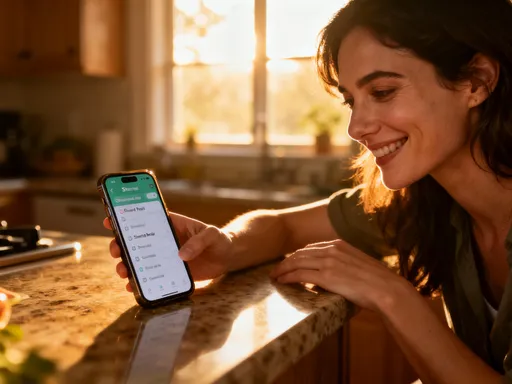
It was a rainy Tuesday when I first saw the notification. I was curled up on the couch, scrolling through my phone, avoiding the pile of grading on my desk. A message popped up in a local group I barely remembered joining: “Extra tomato plants up for grabs—great for balconies!” I paused. My little balcony had been empty for years, and I’d always wanted to grow something. On a whim, I typed, “I’d love one, if it’s still available!”
Within minutes, Mrs. Lin from the third floor replied. “Of course! I have three extras. Come by anytime.” I hesitated—should I really go knock on a stranger’s door? But the rain kept me inside, and curiosity won. I went up, she handed me a small pot with bright green sprouts, and we ended up chatting for twenty minutes about soil, sunlight, and how hard it is to keep plants alive in the city. She even gave me a spare watering can. “Every balcony should have life,” she said with a smile.
That tiny exchange felt different. It wasn’t a transaction. It wasn’t networking. It was just… human. And it made me wonder—what else could we share? I started browsing the app more. People were offering everything: extra muffins, a spare stroller, a ride to the pharmacy. Others were asking for help: “Does anyone have a ladder?” or “Looking for a quiet place to nurse—any moms with a cozy corner?” I realized this wasn’t just a bulletin board. It was a quiet invitation to be part of something.
The beauty of it was how low-pressure it felt. No need to attend a formal meeting or join a committee. Just a simple message, a small favor, a shared moment. I borrowed sugar from a young couple who later invited me to their rooftop BBQ. I lent my vacuum to Mr. Patel, who repaid me with homemade samosas. Each interaction was tiny, but together, they started to weave a thread of connection. For the first time in years, I wasn’t just living in my neighborhood—I was beginning to live with it.
From Transactions to Trust: Building Micro-Communities
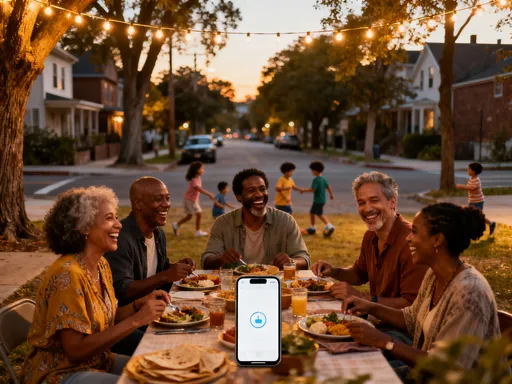
What surprised me most wasn’t just that people were willing to help—it was how quickly those small acts turned into real trust. It started with favors, but soon, people began organizing things. Someone posted, “Coffee morning at the park bench—anyone want to join?” and six of us showed up with thermoses and sleepy kids. Another parent suggested a walk-to-school group to make mornings easier. I teamed up with a mom named Jen, who worked similar hours, to create a lunch swap during busy weeks—she’d make extra soup on Tuesdays, I’d bring quiches on Thursdays. It wasn’t just about saving time. It was about feeling seen.
One Saturday, a few of us met to clean up the shared courtyard. We didn’t plan it—we just showed up with gloves and trash bags because someone had posted, “This place could use some love.” As we pulled weeds and swept leaves, we talked about everything: work stress, aging parents, how hard it is to find good childcare. There was no agenda, no pressure—just presence. And in that moment, I realized something powerful: community isn’t built in grand gestures. It’s built in the in-between moments—the shared silence, the passing smile, the “I saw this and thought of you” text.
The app didn’t create this. It just gave us a way to find each other. Before, we were all doing our own thing, isolated by routine and hesitation. Now, we had a simple channel to say, “I need help,” or “I have something to share,” without fear of bothering anyone. That small shift changed everything. We weren’t just neighbors anymore. We were becoming a micro-community—a patchwork of support that showed up in quiet, meaningful ways. When my oven broke, three people offered their kitchens. When someone’s dog got loose, half the building was texting updates. It wasn’t perfect, but it was real.
Innovation in the Everyday: How Helping Others Sharpens Your Mind
You might think innovation happens in labs or tech startups. But I’ve learned it also happens in shared laundry rooms and cluttered bike storage areas. One weekend, our building’s bike rack was a mess—chained bikes blocking the path, flat tires, forgotten locks. I posted, “Anyone want to help reorganize the bike area? It’s getting tricky to get in and out.” To my surprise, four people showed up with tools and ideas.
We spent a few hours untangling chains, labeling spots, and creating a simple sign-up sheet. It wasn’t rocket science, but it required creativity. We had to think about space, access, fairness. We debated solutions, compromised, and finally landed on a system that worked for everyone. And you know what? That small project made me feel sharper. It reminded me that problem-solving isn’t just for work—it’s a life skill. Working together, we weren’t just fixing a rack. We were practicing collaboration, empathy, and adaptability.
I started noticing this elsewhere. Planning a potluck required coordination. Organizing a toy swap meant thinking about fairness and storage. Even simple things—like figuring out who could take in a package when someone was away—required creative thinking. These weren’t big innovations, but they kept my mind active in ways my daily routine didn’t. I began to see challenges not as burdens, but as puzzles to solve with others. And that shift spilled over into my work. I became better at brainstorming, more patient with process, more open to input. Turns out, community isn’t just good for the heart—it’s good for the brain.
There’s a quiet kind of intelligence that grows when you’re part of a group that cares. It’s not about being the smartest person in the room. It’s about learning to listen, to adapt, to see solutions in unexpected places. And the more I engaged, the more I realized how much I’d been underestimating myself—and my neighbors.
Workday Balance: When Community Carries You Through Stress
Last winter, I had one of those weeks where everything piled up. A major project deadline, a sick child, and my car in the shop. I was running on coffee and willpower. Then, on Tuesday morning, a message popped up: “Heading to the grocery store—can I grab anything for you?” It was from Amina, a neighbor I’d only met a few times. I almost didn’t reply—old habits die hard. But I typed back, “If you’re really sure… I’m out of milk and bread.”
By noon, there was a bag at my door. No fanfare. No expectation. Just help. And honestly? It felt like someone had lifted a backpack full of rocks off my shoulders. It wasn’t about the groceries. It was about knowing I wasn’t alone. That if I fell behind, someone would notice. That I didn’t have to do it all by myself.
That small act changed my entire week. I slept better. I was calmer with my kids. I showed up at work with more focus because I wasn’t constantly worrying about the to-do list at home. It made me realize how much mental energy we spend just managing life—juggling tasks, remembering errands, stressing over logistics. When that weight is shared, even a little, it creates space. Space to breathe. Space to think. Space to be human.
Community, I’ve learned, is emotional infrastructure. It’s not flashy, but it’s essential. Just like electricity or water, it keeps things running. And when it’s there, you don’t notice it—until it’s gone. But when it’s strong, it holds you up. It lets you take risks at work, say yes to opportunities, rest when you need to. It doesn’t eliminate stress, but it makes it bearable. And for someone like me—trying to do my best at everything—it’s been a game-changer.
Raising Kids and Growing Together: A Village Reborn
Being a parent can feel like walking a tightrope—especially when you’re doing it without a safety net. I remember one afternoon, I was in the middle of an important video call when my daughter came in, pale and shivering. Her temperature was spiking. I ended the call and started pacing, trying to decide whether to call the doctor or wait it out. Then I remembered the app. I posted: “6-year-old with sudden fever—anyone have experience with this? Worried it’s more than a cold.”
Within minutes, Sarah, a nurse who lives two floors down, replied. “Let me come up.” She brought a cool cloth, checked my daughter’s symptoms, and helped me decide when to seek care. She stayed for an hour, calming both of us. I don’t know what I would’ve done without her. And the best part? She didn’t treat it like a big deal. “We’re all in this together,” she said as she left.
That moment shifted something in me. I realized we weren’t just building a friendly neighborhood—we were rebuilding the village it takes to raise a child. Now, when kids need last-minute pickups, someone always steps up. When a parent wants to attend a class or appointment, we organize playdates. We share babysitting, advice, even freezer meals during tough weeks. The app didn’t create this care—it just made it visible and accessible.
Our kids feel it too. They know they can knock on certain doors if they need help. They call some neighbors “Auntie” or “Uncle” even though they’re not related. They’ve learned that community means looking out for each other. And as a parent, that gives me a deep sense of peace. I’m not raising my children in isolation. I’m raising them in a circle of care—one that’s growing stronger every day.
A Life Transformed: Small Tech, Lasting Meaning
Today, when I walk through my neighborhood, it feels different. Not because the buildings changed, but because the way I see them—and the people in them—has. The hallway isn’t just a passage anymore. It’s a place where we stop to chat, share news, offer help. The courtyard isn’t just concrete and grass. It’s where we gather, celebrate, and support each other. The app didn’t do this alone. But it gave us a starting point—a simple, gentle nudge toward connection in a world that often pulls us apart.
I used to think technology was about speed, efficiency, doing more in less time. But this experience taught me that the most powerful tech isn’t the flashiest. It’s the kind that helps us be more human. That reminds us we’re not meant to do life alone. That turns strangers into allies, buildings into homes, and neighborhoods into communities.
I still use the app every week—sometimes to ask for help, often to offer it. But more than that, I carry its lesson with me: that connection is a practice. It grows in small moments. It thrives on generosity, curiosity, and courage. And it’s available to all of us, no matter how busy, how tired, how disconnected we’ve felt.
If you’re reading this and thinking, “I don’t even know my neighbors,” I get it. I was there. But I also know that change starts with one message, one borrowed cup of sugar, one “I see you, and I’m here.” The tools we need aren’t always high-tech. Sometimes, they’re just the courage to reach out. And sometimes, that’s enough to make a whole world of difference.