What if Distance Could Never Weaken Your Closest Friendships?
Imagine missing birthdays, inside jokes fading, and conversations growing awkward—all because life pulled you and your best friend apart. It happens to so many of us. You used to talk every day, laugh over nothing, and finish each other’s sentences. Now, months go by without a real chat. Life gets busy—new jobs, moving cities, raising kids—and suddenly, that deep connection starts to feel distant. But what if you could still share laughter, adventures, and quiet moments—no matter the miles? What if you could sit beside your best friend on a virtual porch, watching a digital sunset, and feel like you’re truly together? Virtual reality isn’t just for games or tech experiments. It’s quietly becoming one of the most meaningful tools for keeping real friendships alive, warm, and emotionally present—even when you’re worlds apart.
The Quiet Drift: How Life Separates Even the Closest Friends
We don’t usually lose friends in a dramatic fight or a sudden fallout. More often, it’s a slow fade—a gentle, almost invisible drift that happens when life pulls us in different directions. One of you moves across the country for a new job. Another becomes a new parent and every spare moment is filled with diapers, feedings, and sleepless nights. Someone else starts a demanding graduate program, and their social life quietly slips away. The texts slow down. The calls stop happening. You see their photo pop up in your memories app and think, I should really reach out… but then the day gets away from you.
This kind of emotional distance isn’t anyone’s fault. It’s just life. But that doesn’t make it hurt any less. You might find yourself scrolling through old messages, smiling at a joke you shared years ago, wondering how two people who once talked for hours about everything now struggle to say more than “How are you?” in a text. The silence grows heavier each time you don’t reach out. And the longer it goes on, the harder it feels to break it.
What’s missing isn’t love or care—it’s presence. You still care deeply. You still want to be part of each other’s lives. But modern communication—texting, email, even video calls—often falls short when it comes to recreating that sense of being together. A quick “Thinking of you!” message is sweet, but it doesn’t replace the comfort of sitting side by side, sharing space, and just being. That’s where so many friendships start to lose their rhythm. And that’s exactly where something like virtual reality can step in—not to replace real-life connection, but to keep the flame alive until you can be together again.
Beyond Video Calls: Why We Need More Than Screens to Stay Close
We’ve all tried to stay close through video calls. And yes, seeing your friend’s face on a screen helps. It’s better than nothing. But let’s be honest—most of us dread them after a while. There’s something about the flatness of a Zoom or FaceTime call that makes it feel… incomplete. You’re staring into a little rectangle, trying to read expressions, fighting lag, and dealing with awkward silences that feel heavier than they ever did in person. You can’t look at the same view, share a moment of awe at a passing bird, or laugh at the same silly thing happening off-camera.
And then there’s the pressure. Video calls often feel like performances. You have to look presentable, find good lighting, make eye contact with the camera (not the screen), and keep the conversation flowing. If there’s a pause, it’s uncomfortable. You’re not just talking—you’re on. That’s exhausting, especially when you’re already tired from work or parenting or just adulting in general. No wonder we keep putting them off.
What we really miss isn’t just hearing our friend’s voice or seeing their face. It’s the feeling of shared space. It’s the comfort of sitting together on a couch, walking through a park, or sipping coffee at a quiet table while the world moves around you. It’s the unspoken connection—the way a glance can say more than words, or how silence between close friends can feel warm instead of heavy. Traditional digital communication just can’t recreate that. But what if it could? What if you could step into a space where you and your friend are truly together, even if your bodies are miles apart?
This is where virtual reality starts to make a real difference. It’s not about flashy graphics or gaming headsets. It’s about emotional presence. It’s about creating a space where you can just be with someone you love, without the pressure, without the performance, and without the flatness of a screen. You’re not watching each other—you’re standing beside each other. And that small shift changes everything.
Stepping Into the Same World: How VR Creates Shared Presence
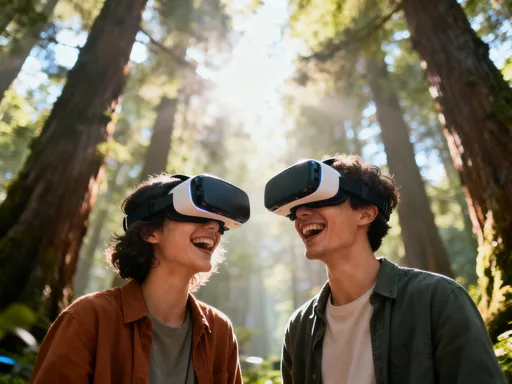
Imagine putting on a lightweight headset and suddenly finding yourself standing on a quiet beach at sunset. The waves roll in, the sky glows in soft pinks and oranges, and beside you—literally beside you—is your best friend. You can turn your head and see them. You can hear their voice coming from the right side, just like in real life, because of spatial audio. You don’t have to look at a screen. You don’t have to worry about your hair or the mess behind you. You’re both just… there.
This is what VR does so well—it creates a sense of shared presence. Unlike video calls, where you’re looking at a flat image, VR places you both in the same three-dimensional space. You can walk around, turn to face each other, and even use hand gestures if your headset supports them. It’s not perfect, but it’s close enough to feel real. And that feeling of “being together” is powerful. It reduces the emotional distance that physical distance creates.
Think about how much of friendship happens in shared environments. You don’t just talk—you do things together. You cook, you walk, you sit on a porch swing, you browse a market. These activities create natural conversation. In VR, you can do many of those same things. You might explore a virtual forest, visit a digital art gallery, or sit around a campfire under a starry sky. You’re not just talking at each other—you’re experiencing something together. And that makes the conversation flow more naturally, more warmly.
One mom in Ohio told me how she and her college best friend—now living in Oregon—started meeting every Sunday in a VR beach world. They don’t even talk much at first. They just walk along the shore, pick up shells, and watch the waves. After a few minutes, the conversation starts—about their kids, their worries, their dreams. It feels like the old days, she said. “We’re not trying to have a ‘call.’ We’re just hanging out. And that makes all the difference.”
Real Talk in Virtual Rooms: Keeping Conversations Alive Without Pressure
One of the most beautiful things about VR friendships is how it removes the pressure to perform. In a video call, silence can feel awkward. But in VR, shared activities create natural rhythm. You don’t have to stare at each other and keep the conversation going. You can be doing something together—cooking in a virtual kitchen, painting in a digital studio, or tending to a shared garden—and let the talk come naturally.
I remember talking to a woman in Texas who reconnected with her sister after two years of silence. They’d grown apart after their mom passed, each dealing with grief in their own way. She said she tried calling, but it felt too heavy. Then she suggested a simple VR hangout—just 15 minutes, no big deal. They met in a peaceful mountain cabin. They made virtual tea, sat by the fire, and didn’t talk for the first ten minutes. But it wasn’t uncomfortable. It felt like being together in grief, without having to explain it. Then, slowly, the words came. Not about the hard things at first—just memories of their mom, little jokes, the way she used to burn toast. And from that small beginning, their relationship started to heal.
That’s the power of doing instead of just talking. When you’re both focused on an activity, the conversation becomes a side effect of being together, not the main event. It’s easier to open up. It’s easier to be real. And for women in our 30s, 40s, and 50s—who often carry so much emotional labor in our families and jobs—this kind of low-pressure connection is a gift. You don’t have to plan a big event or find hours in your schedule. You can meet for 20 minutes, do something simple, and leave feeling closer.
And it’s not just about healing. It’s about joy, too. I’ve heard from friends who play virtual board games, attend online concerts together, or even take VR yoga classes as a duo. These aren’t grand gestures. They’re small, meaningful moments that add up. They remind us that friendship isn’t about how often we talk—it’s about how deeply we feel connected.
Celebrating Together, No Matter the Distance
Life’s big moments shouldn’t be missed. Birthdays, anniversaries, holidays—these are the threads that weave our relationships together. But when you’re far apart, it’s easy to feel left out. You send a gift. You write a card. You hop on a quick call. But it’s not the same as being there, hugging your friend, sharing a meal, laughing at the same jokes in real time.
VR is changing that. Now, you can celebrate together—even if you’re in different time zones. Imagine putting on your headset and walking into a virtual party. There’s music. There are decorations. Your friends appear as avatars, but their voices are real. You can dance, open digital presents, blow out virtual candles on a cake, and toast with glowing glasses under a sky full of stars. It’s not a substitute for being there in person—but it’s so much more than a text or a call.
Planning these events doesn’t have to be complicated. Many VR platforms have built-in party spaces that are easy to customize. You can invite friends with a simple link. Some platforms even let you upload photos or play music. One woman in Canada told me how she threw a surprise 50th birthday party for her best friend in New Zealand. They all met in a virtual garden, released digital lanterns, and shared stories. Her friend cried—not because she was sad, but because she felt so seen, so loved, despite the distance.
If you’re nervous about the tech, start small. Try a quiet coffee meetup before planning a full party. Make sure your friend knows it’s okay to fumble with the headset or ask questions. The goal isn’t perfection—it’s connection. And when you see your friend’s avatar raise a glass to you, hear their laughter echo in the space around you, and feel like you’re truly sharing the moment, you’ll realize how powerful this can be.
Healing Old Rifts and Rebuilding Trust
Not all distance is physical. Sometimes, the biggest gap between friends is emotional—a silence that grew from a misunderstanding, a missed call during a hard time, or simply growing apart without knowing how to reconnect. These moments can feel too heavy for a text or even a phone call. You want to reach out, but you don’t know where to start.
VR can help here, too. Because it creates a neutral, calm space, it can make difficult conversations feel safer. You’re not face-to-face, so there’s less pressure. You’re not on a screen, so you don’t have to worry about your expression being misread. Instead, you’re in a shared world—maybe a quiet forest, a peaceful lakeside, or a cozy reading nook—where you can talk without distractions.
One woman in Florida told me how she finally reached out to her childhood best friend after ten years of silence. They’d lost touch after a disagreement over parenting choices—something that felt huge at the time but now seemed so small. She didn’t know how to start, so she invited her to a simple VR walk in a digital park. They didn’t talk about the past at first. They just walked, watched virtual birds, and remembered old times. Slowly, the conversation deepened. They apologized. They listened. And by the end of the hour, they were making plans to meet in person the following year.
The space itself helped. It wasn’t their homes, their kids, their daily stresses. It was a calm, intentional place where they could focus on each other. And because they weren’t staring directly at each other the whole time, it felt easier to be honest. The virtual environment held the space for healing in a way that a phone call never could.
Making VR Friendship Simple: Getting Started Without Overwhelm
If you’re thinking, This sounds nice, but isn’t VR complicated?—I hear you. The word “virtual reality” can make it sound like you need to be a tech expert. But the truth is, it’s easier than ever to get started. You don’t need expensive gear or a computer the size of a suitcase. Many VR headsets today are all-in-one devices—lightweight, wireless, and designed for everyday people, not gamers.
Start with something simple. Look for a headset that’s user-friendly and affordable. Many come with guided setup and clear instructions. Once you have it, download a social VR app—there are several designed specifically for casual hangouts, not games. Some even let you create your own avatar in minutes, using friendly prompts. Then, invite a friend. Send them a link. Walk them through it, just like you would with a new recipe or a favorite streaming show.
And don’t feel like you have to do anything big. Your first VR meetup can be ten minutes. Just say hello. Walk around a little. See how it feels. You don’t have to plan a party or a deep conversation. The goal is to reconnect, not impress. Over time, you’ll find your rhythm—your favorite spaces, your go-to activities, the little rituals that make it feel like home.
Remember: this isn’t about the technology. It’s about the connection. The headset is just a tool—a doorway into a space where you can be with someone you love, no matter where life has taken you. And for all of us who’ve ever felt the ache of a fading friendship, that’s a gift worth trying for.