Tracked Every Meal Across 3 Countries: The App That Made Healthy Eating Effortless
Remember that moment when you’re abroad, excited to try local food, but also worried about staying on track with your health goals? I’ve been there—juggling jet lag, new cuisines, and lost eating routines. It felt overwhelming—until I found a simple tool that quietly transformed how I eat while traveling. No strict rules, no stress—just gentle guidance that fit seamlessly into my journey. This is how I finally made healthy choices feel natural, even on the road.
The Travel Diet Dilemma: When Adventure Meets Healthy Habits
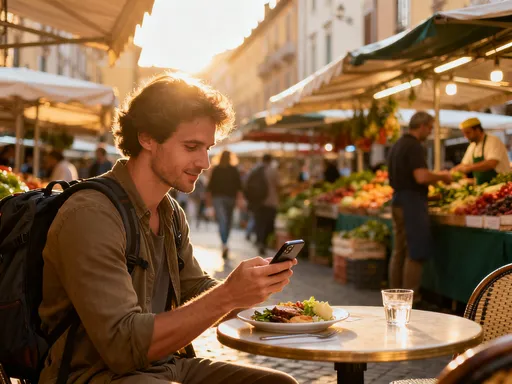
Let’s be honest—travel is one of life’s greatest joys, especially when you're exploring new cultures, walking through bustling markets, or sipping coffee at a quiet sidewalk café. But as much as we love the adventure, our healthy habits often take a back seat. You pack your best intentions, but somewhere between the airport snack and the third helping of regional cheese, things shift. Suddenly, you’re not sure when you last drank water, or if you’ve eaten a vegetable in two days.
I used to think it was just part of the experience—traveling meant letting go. But the truth is, that 'letting go' often left me feeling sluggish, bloated, and mentally foggy. I’d come home exhausted, needing a vacation from my vacation. The problem wasn’t the food itself. It wasn’t that I lacked willpower. The real issue was the lack of awareness. Without my usual routine, I had no anchor. Meals happened whenever, snacks piled up, and hydration became an afterthought.
What I didn’t realize then was that this is a nearly universal experience. So many of us—especially women in our 30s, 40s, and 50s who manage households, careers, and family needs—feel the pressure to 'be good' while also wanting to enjoy life. We don’t want to be perfect. We just want to feel good. And that starts with being aware—not obsessive, not restrictive, but simply in tune with what our bodies are getting.
Travel amplifies the challenge because everything changes at once: time zones, activity levels, food availability, and even portion expectations. In Italy, dinner starts at 8 p.m. and lasts three hours. In Japan, meals are balanced and small. In the U.S., portion sizes can double what you’re used to. Without a way to stay grounded, it’s easy to drift. But what if there was a gentle, low-pressure way to stay connected to your health—without turning your trip into a diet project?
Why Traditional Methods Fail While Traveling
I’ve tried the old-school ways. I’ve carried a little notebook, promising myself I’d log every bite. I’ve downloaded calorie counters that required me to type in every ingredient, estimate portion sizes, and convert grams to ounces. And every single time, I gave up—usually within two days. Why? Because those tools weren’t built for real life. They were built for a lab, not for a woman rushing through a train station with a suitcase, a coffee, and a toddler.
Here’s the thing: tracking your food shouldn’t feel like homework. But most traditional methods do. They demand precision, consistency, and mental energy—three things that are in short supply when you’re navigating a foreign city, dealing with language barriers, or adjusting to a new time zone. I remember standing in a Parisian boulangerie, trying to figure out how many calories were in a ham and cheese croissant. I ended up just guessing, and then feeling guilty for guessing wrong. That’s not helpful. That’s stress.
And let’s talk about time zones. When your body clock is off, your hunger cues get confused. You might eat breakfast at 10 a.m., lunch at 3 p.m., and dinner at 9 p.m.—none of which fit into a standard tracking template. Add in spontaneous meals with friends, street food that doesn’t come with a label, or hotel buffets with mystery dishes, and it’s no wonder most people abandon tracking altogether.
The deeper issue is that these tools often feel judgmental. They show red warnings, beep at you for going over, and make you feel like you’ve failed. But travel isn’t about perfection. It’s about experience. So when a tool makes you feel bad for enjoying a local delicacy, it’s not supporting you—it’s working against you. What I needed wasn’t a drill sergeant. I needed a gentle guide—a companion who could help me stay aware without killing the joy.
That’s why I kept searching. And that’s how I finally found something different—not another rigid tracker, but a smart, adaptive tool designed for real people living real lives.
A Smarter Way: How Travel-Friendly Diet Apps Work
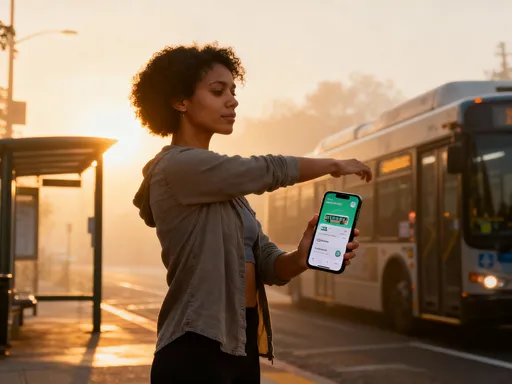
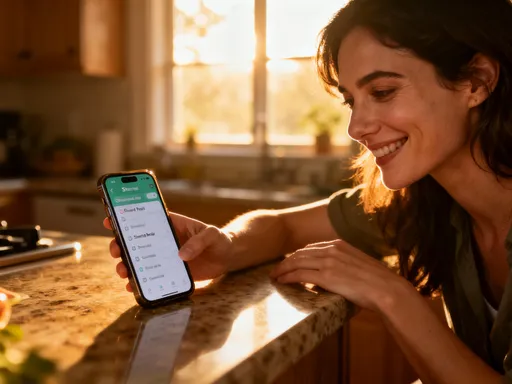
The turning point came when I discovered a modern diet app that didn’t treat me like a data point. It didn’t demand perfection. Instead, it focused on awareness, ease, and personalization. The first thing I noticed was how simple it was to use. With just a quick photo of my meal, the app could recognize most foods—no typing, no searching through endless menus. It worked in multiple languages, which was a game-changer when I was in rural Portugal and staring at a plate of something delicious but unidentifiable.
But the real magic was in how it adapted to me. It didn’t just track calories—it tracked patterns. After a few days, it started noticing that I tended to skip breakfast when I was on a morning train. It would send a soft reminder: 'You’re on the go—maybe a banana or yogurt before your next stop?' Not pushy. Not shaming. Just kind. It also picked up that I drank less water on flight days, so it would gently nudge me: 'Long travel day? Don’t forget to hydrate.'
One of the most helpful features was the ability to log meals with voice notes. If I was in a busy market in Bangkok and didn’t have time to tap anything, I could just say, 'Just had a coconut curry with rice and chicken—street vendor near the river.' Later, when I had a quiet moment, the app would transcribe it and suggest a likely match from its database. It wasn’t 100% accurate, but it was close enough to keep me in the loop without stress.
And here’s what surprised me: the app didn’t just help me track—it helped me learn. It showed me trends over time. For example, I saw that I naturally ate more carbohydrates in colder climates—probably because my body wanted warmth and energy. In Mediterranean countries, my meals were later, and I ate more olive oil and vegetables. Instead of judging these patterns, the app helped me understand them. It turned data into insight, and insight into self-awareness.
Best of all, it didn’t make me feel restricted. I could still enjoy that flaky pastry in Vienna or the grilled octopus in Santorini. The app didn’t block me or give me a red X. It just helped me see the bigger picture. And that made all the difference.
Seamless Integration: Fitting Health Into Your Journey
The reason this app worked so well wasn’t because it had fancy features—it was because it fit into my life like a good pair of walking shoes. It didn’t demand attention. It didn’t slow me down. Whether I was boarding a train in Switzerland, browsing a night market in Taipei, or relaxing on a beach in Mexico, logging a meal took less than 15 seconds. That’s the key: if it’s not easy, it won’t last.
One of my favorite things was that it worked offline. In remote areas with spotty Wi-Fi, I could still take photos or use voice notes. The app would save everything locally and sync automatically when I got back online. No lost data, no frustration. And because it used image recognition powered by real-world food databases, it could identify common dishes even if I didn’t know the name. A bowl of pho in Hanoi? Recognized. A plate of mezze in Lebanon? Close enough.
It also adapted to time zones automatically. I didn’t have to reset anything. My meals showed up in the right order, no matter where I was. This might sound small, but it made a big difference in how I saw my eating patterns. I could actually see how jet lag affected my meal timing—and how that, in turn, affected my energy and sleep.
Over time, using the app stopped feeling like a chore. It became part of my daily rhythm—like checking the weather, taking a photo, or writing a quick journal entry. I wasn’t 'tracking' anymore. I was simply staying connected. And that shift—from effort to habit—was what made the real change possible.
I started making better choices not because I was being watched, but because I was more aware. I noticed when I was eating out of boredom versus hunger. I saw how much better I felt when I included protein in my breakfast. I realized that one glass of wine enhanced an evening, but two left me tired the next day. These weren’t rules imposed from the outside—they were discoveries I made for myself.
Beyond Tracking: Building Awareness Without Obsession
What I didn’t expect was how much my relationship with food would change. Before, I often felt guilty after eating something 'indulgent.' Now, I feel curious. I ask myself: Did I enjoy it? Did it fuel me? How did my body respond? The app didn’t create these questions—it created the space for them.
Instead of seeing food as 'good' or 'bad,' I started seeing it as information. That bowl of pasta in Rome wasn’t a mistake—it was a cultural experience, a moment of joy, and yes, a carb-heavy meal. But because I was aware, I could balance it. Maybe I walked more that day. Maybe I added extra vegetables at lunch. The app didn’t punish me. It just helped me see the full picture.
And that’s where the real power lies—not in counting, but in understanding. The app highlighted patterns I would have never noticed on my own. For example, I learned that I craved sweets more when I was tired—usually in the late afternoon. Once I saw that pattern, I started planning a small protein snack for that time. Result? Fewer sugar cravings, more stable energy.
I also became more connected to local food cultures. Instead of avoiding unfamiliar dishes, I started exploring them—with awareness. I’d take a photo, log it, and later read about the ingredients. I learned that many traditional dishes are naturally balanced—like Greek mezze, Japanese bento boxes, or Moroccan tagines with lentils and vegetables. The app didn’t make me eat 'perfectly.' It made me eat more mindfully.
Most importantly, it helped me let go of guilt. I stopped seeing healthy eating as a strict rulebook and started seeing it as a flexible practice. Some days were lighter on veggies. Some days included dessert. And that was okay. The goal wasn’t perfection—it was awareness, balance, and self-care.
Real-Life Impact: How My Energy, Mood, and Choices Improved
The changes didn’t happen overnight, but they were real. Within a few weeks of using the app consistently—especially while traveling—I started noticing differences. I had more energy. I wasn’t crashing in the afternoons. I slept better. My skin looked clearer. My clothes fit better. But the biggest change was internal: I felt calmer, more in control, and more in tune with my body.
I didn’t lose weight because I was on a diet. I lost weight because I was making more conscious choices—without feeling deprived. I still ate street food in Bangkok. I still had croissants in Paris. I still shared tapas in Barcelona. But now, I was doing it with awareness. I could enjoy the moment without the next-day regret.
My family noticed, too. My daughter said, 'Mom, you seem happier when we travel now.' My husband commented that I wasn’t as tired after long flights. Even my sister asked what I was doing differently—because I looked 'glowing.' It wasn’t makeup. It wasn’t a new skincare routine. It was simply that I was taking better care of myself, in a way that fit my life.
And here’s the thing: I didn’t have to give anything up. I didn’t follow a strict plan. I didn’t eliminate entire food groups. I just became more aware. I started drinking more water because the app reminded me. I began choosing fruit over cookies when I wasn’t truly hungry. I noticed when I was eating out of stress—and found other ways to cope, like walking or journaling.
The app didn’t make me perfect. It made me present. And that presence made all the difference.
Making It Your Own: Simple Steps to Start Without Overwhelm
If you’re thinking about trying something like this, I’ll be honest: don’t aim for perfection. Start small. Pick one meal a day to log—maybe breakfast, since it’s often the most consistent. Use the photo feature. Let the app learn your habits. Don’t stress about accuracy. The goal isn’t to hit a number—it’s to build awareness.
Focus on patterns, not points. After a week, look back. Did you drink enough water? Did you eat enough protein? Did you notice energy dips? These insights are more valuable than any daily total. Celebrate small wins: choosing water over soda, noticing when you’re full, enjoying a meal without rushing.
And be kind to yourself. Some days, you’ll forget to log. Some days, you’ll eat something just because it tastes good. That’s not failure. That’s life. The app isn’t there to judge. It’s there to support. Think of it as a quiet companion on your journey—one that helps you stay connected to your well-being, no matter where you are.
Over time, you’ll find that healthy eating isn’t about rules. It’s about rhythm. It’s about listening to your body, honoring your cravings, and making choices that make you feel good—on vacation and at home. And with the right tool, it doesn’t have to be hard. It can be effortless. It can be joyful. It can be part of the adventure.